


Nature - 2019 October - Vol 574 No 7780
Publisher: Nature
Format: Paperback
ISBN: 9770028083095
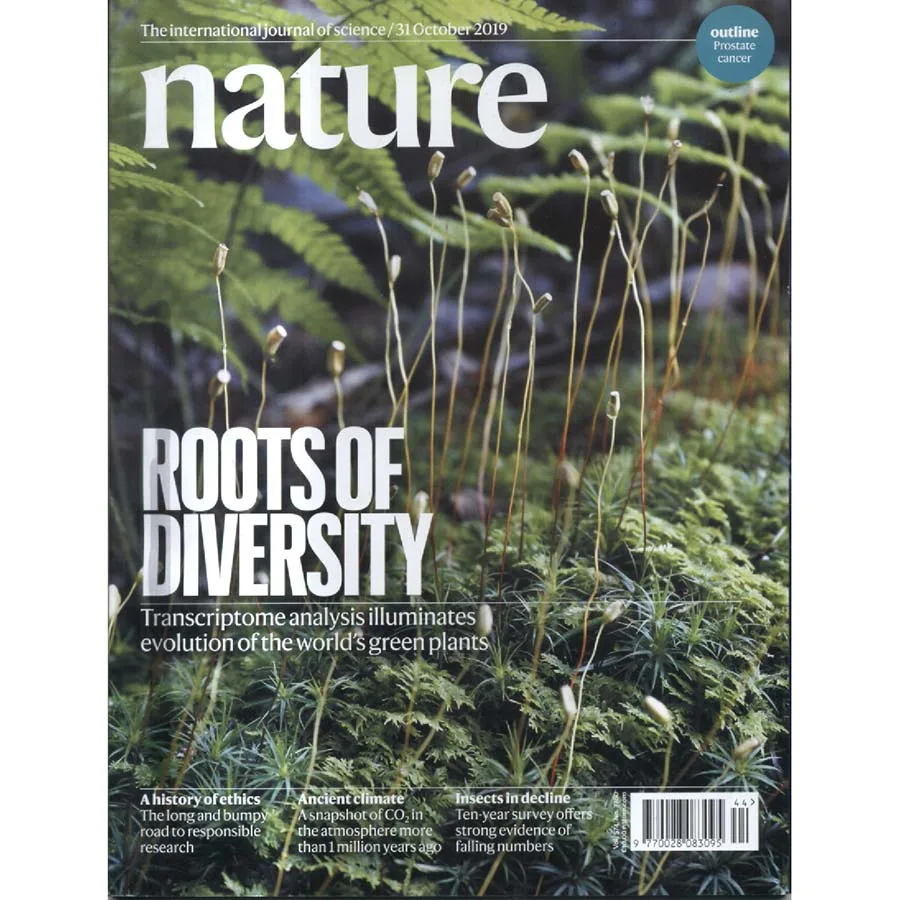
There are few publications capable of making moss look both spiritually profound and mildly intimidating, but Nature – October 2019, Vol. 574 No. 7780 manages it effortlessly. Beneath the headline “ROOTS OF DIVERSITY”, delicate green plant life rises from the forest floor while inside the journal scientists calmly unravel hundreds of millions of years of evolution using transcriptome analysis. As one does.
The cover is genuinely beautiful in that distinctly Nature fashion — lush, damp, faintly prehistoric, and carrying the quiet implication that plants have been conducting highly sophisticated biological operations long before humanity learned how to organise email folders properly. The moss stalks stand like tiny antennae receiving messages from Earth’s deep evolutionary past, while readers stare at them thinking: “Good heavens, even the moss has a data set.”
The lead feature explores the evolution of the world’s green plants, which sounds charmingly gentle until you realise it involves immense computational analysis and the reconstruction of ancient biological histories spanning geological time. Somewhere inside this issue, researchers are decoding plant evolution with techniques so advanced they make ordinary gardening feel hopelessly amateur.
And because this is Nature, the issue quickly broadens into a full buffet of existential scientific concerns. There are discussions on responsible research ethics, snapshots of atmospheric carbon dioxide from over a million years ago, and increasingly grim evidence for declining insect populations. In classic Nature style, readers are invited to appreciate the wonder of plant diversity while simultaneously confronting the possibility that entire ecosystems are quietly collapsing around us.
The “history of ethics” feature is particularly wonderful because it reminds us that even science itself occasionally requires supervision. Humanity can map genomes, reconstruct climates, and peer into the deep past of plant evolution, yet still periodically needs formal reminders not to behave terribly in laboratories.
Meanwhile, the insect-decline article carries that unmistakable late-2010s scientific mood: polite, evidence-based concern delivered in calm typography while quietly implying that civilisation may wish to pay attention immediately. Nature never shouts. It simply places alarming truths beside beautiful cover photography and trusts readers to cope emotionally on their own.
One of the enduring joys of Nature is the extraordinary contrast between its elegant presentation and the sheer scale of the subjects it tackles. “A snapshot of CO₂ more than 1 million years ago,” it says casually, as though this is perfectly normal lunchtime reading. Every issue feels like humanity collectively trying to reverse-engineer reality before the library closes.
Naturally, owning a copy of Nature projects a certain intellectual atmosphere. It suggests someone deeply engaged with science, ecology, and perhaps the molecular history of bryophytes. Whether you actually read the transcriptome analysis article or simply admired the moss photography while feeling pleasantly underqualified is secondary. The magazine functions equally well as scientific literature and aspirational interior decoration.
This October 2019 issue now feels especially evocative of that period when climate science, biodiversity loss, and evolutionary biology were increasingly converging into one giant interconnected story. The more researchers learned, the more obvious it became that nothing in nature exists in isolation — except perhaps unread academic journals stacked beside the bed.
Condition is listed as Good, meaning this copy has survived the traditional hazards faced by elite scientific publications: backpacks overloaded with good intentions, office desks belonging to exhausted academics, coffee exposure near extremely important graphs, and years spent in carefully curated piles labelled “must read properly later”.
An excellent issue for science enthusiasts, botanists, ecology readers, moss admirers, or anyone who enjoys magazines that can make tiny forest plants feel more historically significant than most empires.
Keep browsing: See more Nature Journal books Other books by Nature
